You pay for every Google Ads click, so the page behind the ad matters as much as the ad itself. In the landing page vs homepage for Google Ads debate, the answer is usually clear: a dedicated page built around one search intent wins. Here is why, what the data actually supports, and when a homepage is still fine.
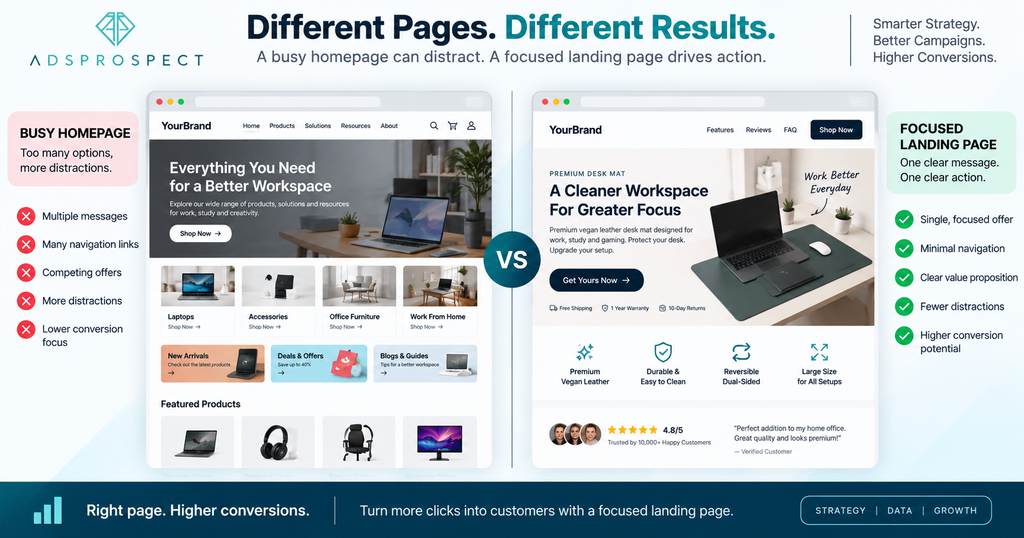
Why homepages struggle with paid traffic
Your homepage serves everyone at once: returning customers, job applicants, suppliers, and people casually researching your brand. A paid search visitor is different. They typed a specific query seconds ago and want a specific answer.
A typical homepage works against them because it:
- Leads with a broad brand message rather than the offer in your ad
- Exposes full navigation, creating dozens of exit paths
- Splits attention across several competing calls to action
- Rarely names the service, city, or promotion that was searched for
Every extra decision is a chance to lose a click you have already paid for.
Four Reasons Dedicated Landing Pages Win
1. One Page, One Goal
A homepage behaves like a department store; a landing page behaves like a pop-up stall. Reduced navigation, one conversion action, and supporting proof around it leave the visitor a single obvious next step.
2. Message Match with the Search Query
Message match is your fastest trust signal. Someone searching “emergency plumber, open now” who lands on a page headlined for emergency call-outs, with response times and a phone number above the fold, knows immediately they are in the right place.
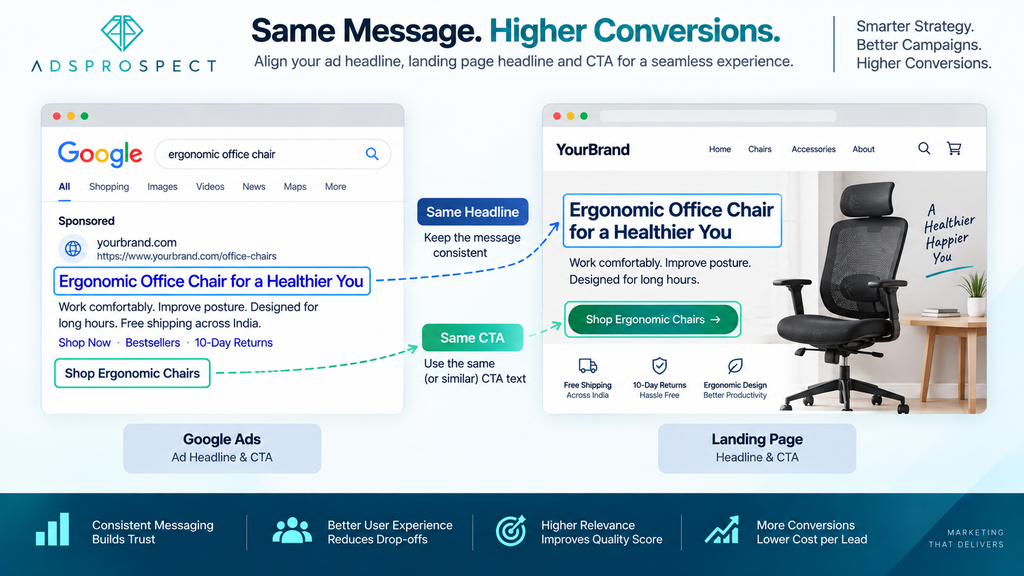
3. A Stronger Landing Page Experience Signal
Landing page experience is one of three components Google reports in Quality Score, alongside expected click-through rate and ad relevance. Google describes Quality Score as a diagnostic tool rather than an auction input, but ad and landing page quality do influence Ad Rank. Furthermore, sending each ad group to its most relevant page is the practical way to act on that.
4. Cleaner Attribution and Easier Testing
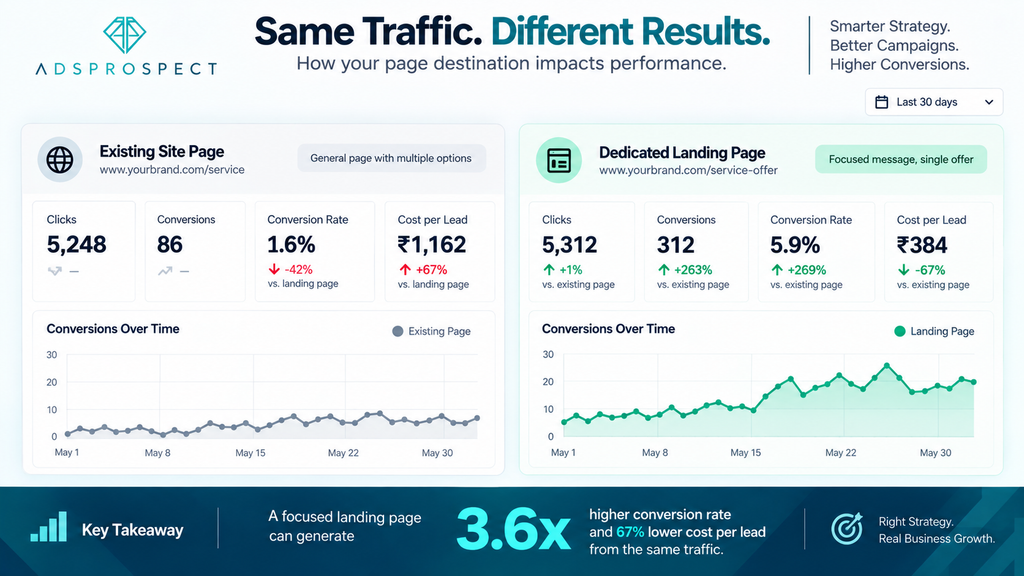
When paid clicks share a homepage with organic, email, and direct traffic, isolating what produced a lead gets messy. Dedicated pages give you a clean container for testing:
- Headline and offer variants, one at a time
- Form length and field-level drop-off
- Conversion rate and cost per lead by campaign
- Changes shipped without touching your main site
When a Homepage Is Still a Reasonable Choice
Legitimate exceptions do exist:
- Brand campaigns. Someone searching your company name already knows you and often wants to explore.
- Very small budgets. Below a certain spend, building and maintaining several pages may not pay back yet.
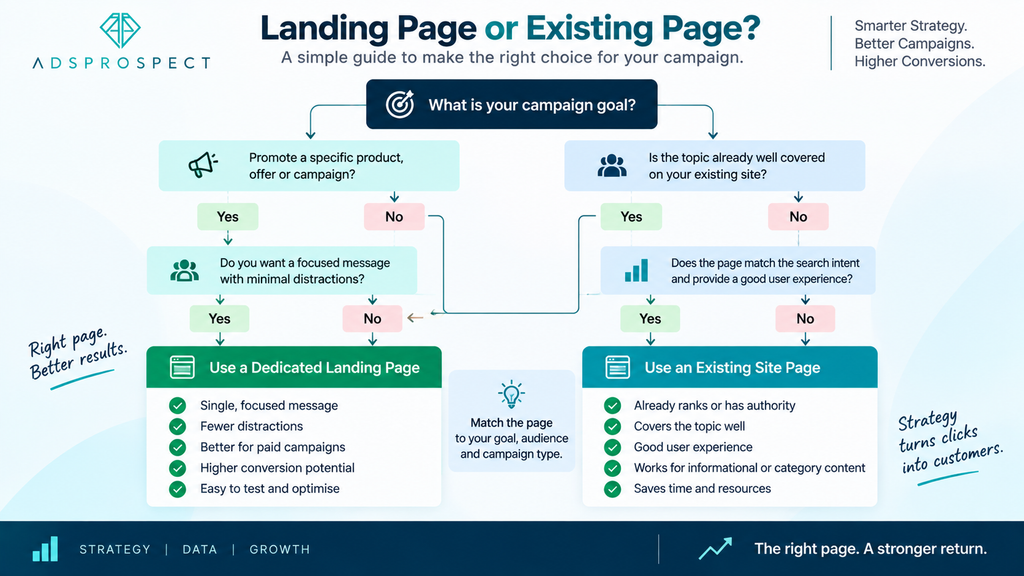
- Broad ecommerce queries. Category and collection pages usually beat single-product pages for browsing searches.
In each case, send traffic to your most relevant existing page rather than the home page.
Frequently Asked Questions
Does Google penalize sending Google Ads traffic to a homepage?
No. A homepage can still be rated well if it is relevant, fast, and mobile-friendly. The risk is a weaker landing page experience rating when the page does not address the keyword behind the click.
Should I remove the navigation menu from a landing page?
Reducing navigation is standard practice on lead generation pages because it limits exit paths. Treat it as a hypothesis to test, and keep trust links such as privacy and contact details accessible.
How many landing pages do I need?
Start with one page per core offer, then split further where search intent clearly differs, such as by city, urgency, or audience. Build only what you can maintain and test properly.
Can I use existing service pages instead of building new ones?
Often yes, especially early on. A tightly focused service page with a clear form usually performs far better than a homepage, and gives you a baseline to compare against a purpose-built page later.